Forum Archives
Forum Categories

URCA April Safety & Regulatory Brief
Posted by [email protected] on Apr. 10, 2026 / Subscribe 0
URCA Safety & Regulatory Brief
Key Updates from the UOSH Advisory Council Meeting
For Utah Roofing Contractors Association Members
Overview
UOSH shared its latest statewide safety data and regulatory updates for FY2026 (October–March). Roofing continues to be one of Utah’s highest‑risk construction trades, and several trends from this meeting directly affect URCA members. UOSH also noted ongoing staffing shortages, which may extend response times for consultations and training requests. Despite this, the agency emphasized continued support for fall‑protection stand‑downs, onsite presentations, and employer outreach.
Construction Accident Trends (FY2026 YTD)
From October through March, Utah recorded 79 construction accidents, including 2 fatalities. Roofing contractors accounted for 4 incidents during this period.
Top Hazards Affecting Roofing
Across all construction trades, the leading causes of serious injuries and fatalities were:
- Falls from elevation
- Struck‑by incidents
- Caught‑in/between incidents
- Slip, trip, and fall injuries
These categories represent the majority of roofing‑related injuries statewide.
Fatality Trends
Falls remain the leading cause of death in construction, with 23 fall‑related fatalities recorded since 2022. Other fatality causes relevant to roofing include struck‑by incidents, caught‑in/between incidents, and electrocution. These patterns reinforce the need for consistent fall protection, material‑handling controls, and electrical hazard awareness.
Seasonal Patterns
Accident totals peaked in March, which recorded 94 incidents—the highest monthly total so far this fiscal year. This aligns with seasonal increases in construction activity and underscores the importance of spring safety refreshers.
Roofing‑Specific NAICS Data
Within construction, roofing contractors (NAICS 238160) reported 4 incidents year‑to‑date. While this number is relatively low compared to other trades, the severity of roofing incidents tends to be higher due to fall exposure.
What UOSH Looks for During Investigations
UOSH emphasized that investigations evaluate the entire safety system, including:
- Written safety programs
- Documented training (initial and refresher)
- Field supervision and enforcement
- Equipment condition and guarding
- Corrective actions after near‑misses or violations
Roofing contractors should ensure these elements are consistent and well‑documented.
Action Steps for URCA Members
To reduce risk and prepare for upcoming regulatory changes, URCA members should:
1. Strengthen Fall Protection Programs
- Verify tie‑off points, guardrails, and ladder setup
- Address swing hazards and temporary conditions
- Conduct short, frequent toolbox talks
2. Improve Material‑Handling Safety
- Secure loads on roofs
- Maintain clear drop zones
- Train crews on struck‑by prevention
3. Review Equipment Guarding
- Ensure guards are in place on saws, conveyors, and rotating equipment
- Replace or retrofit older equipment lacking modern safety features
4. Prepare for Heat‑Illness Standards
A federal heat‑illness rule is expected soon. Begin aligning with best practices now (shade, water, acclimatization).
UOSH Support for URCA Members
UOSH confirmed they can assist with:
- Fall‑protection stand‑downs
- Onsite training and presentations
- Consultation visits (non‑punitive)
- Posters, handouts, and safety materials
URCA members are encouraged to invite UOSH to company safety days and share lessons learned for future Advisory Council meetings.
Read More
Struck?By Injuries on the Rise: What Contractors Need to Know
Posted by [email protected] on Jan. 15, 2026 / Subscribe 0
Safety Trends Every Roofing Contractor Should Be Watching in 2026
New data from UOSH reveals an important shift in the types of injuries occurring on jobsites across Utah. While fall‑related incidents have historically been the most common and most dangerous for roofing professionals, recent numbers show a notable rise in struck‑by injuries — cases where a worker is hit by an object, tool, or piece of equipment.
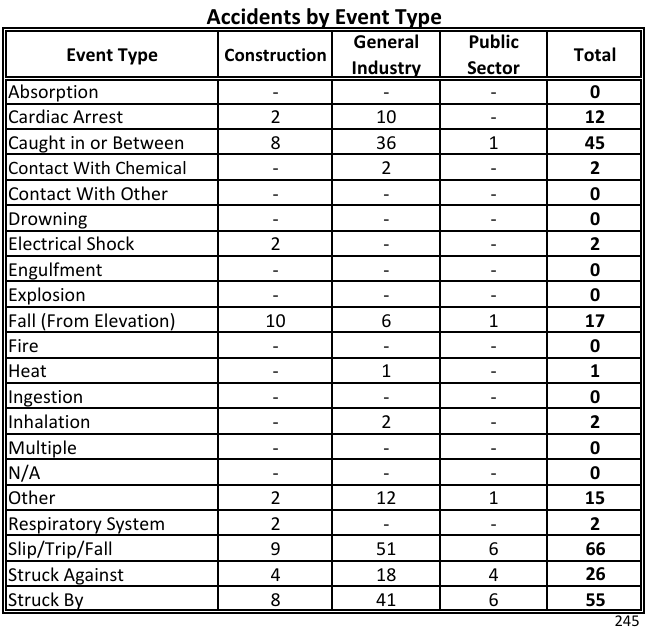
Struck‑by incidents don’t always involve large or heavy materials. Even small tools, loose debris, or improperly secured equipment can cause serious harm. Injuries to fingers, hands, and the head are becoming increasingly common, and even a “minor” injury like a broken finger can sideline a worker for weeks and significantly impact their livelihood.
At the same time, it’s encouraging to see that fall‑related accidents are trending downward. This progress reflects the industry’s continued investment in fall protection training, equipment, and awareness.
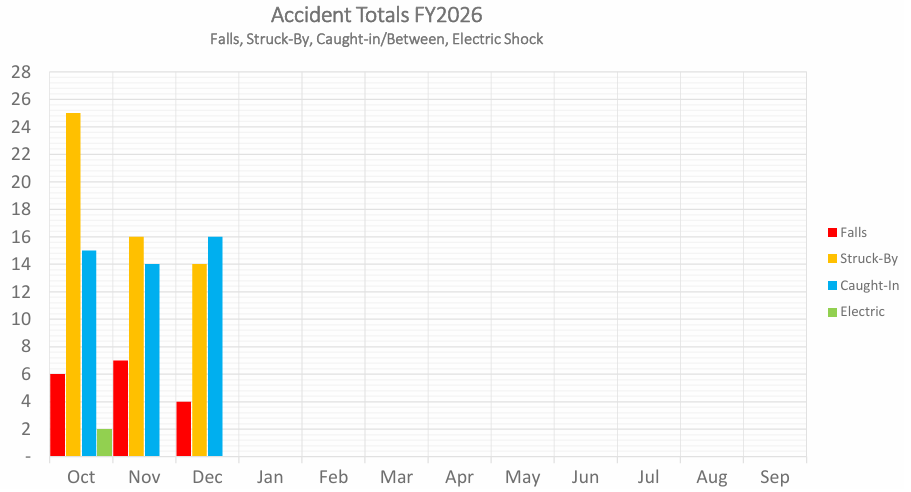
However, despite the decline in fall injuries, fall protection remains one of the top three UOSH violations issued statewide. This tells us that while contractors are making progress, there is still work to be done to ensure every crew member is consistently protected and every job site meets safety standards.
Roofing environments naturally carry elevated fall risks, but struck‑by hazards exist on every jobsite, regardless of height or task. Both require ongoing attention, training, and communication.
To support employers in strengthening their safety programs, UOSH offers free, non‑punitive safety consultations designed to help businesses identify and correct workplace hazards. Their team of professional safety and industrial hygiene consultants can review your current safety practices, point out potential risks, and provide practical recommendations to reduce or eliminate hazards. These consultations are confidential, come with a detailed written report, and can include follow‑up visits or worker training if requested. Importantly, the process is educational and supportive — no citations or penalties are issued during a consultation — making it an invaluable resource for contractors who want to stay ahead of compliance requirements and protect their teams.
As an industry, we should celebrate the progress made in reducing falls while staying vigilant about emerging risks. Struck‑by injuries can be just as life‑changing, and prevention starts with awareness, communication, and consistent safety practices.
FY 2025 Utah Workplace Accident Summary
Posted by [email protected] on Oct. 9, 2025 / Subscribe 0
📊 FY2025 Utah Workplace Accident Summary
What URCA Members Need to Know
As part of URCA’s commitment to safety, transparency, and advocacy, we’re sharing highlights from the Utah Occupational Safety and Health (UOSH) FY2025 accident report. Covering incidents from October 1, 2024 to September 30, 2025, this data offers critical insights into where risks are rising—and how our members can take action.
🚧 Total Accidents by Sector
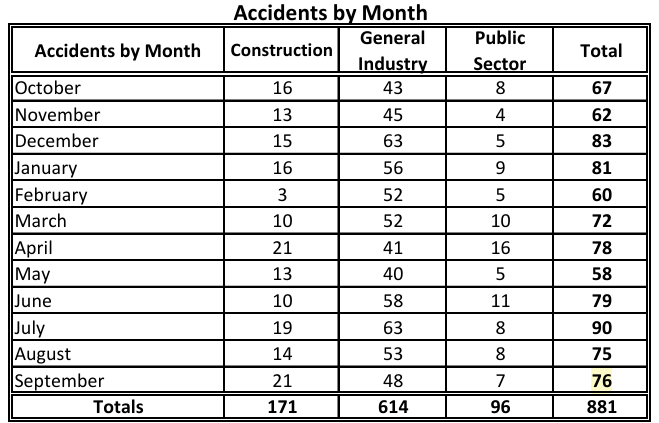
Construction: 171
General Industry: 614
Public Sector: 96
Total: 881
While construction accounted for fewer total incidents than general industry, it continues to carry a disproportionately high rate of serious injuries and fatalities.
⚠️ Fatalities & Catastrophes
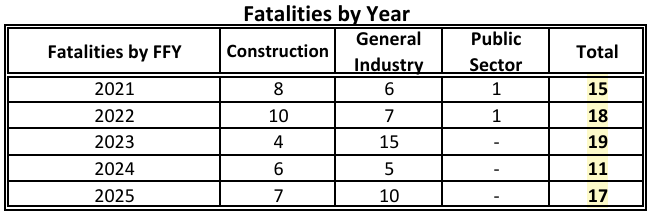
- 17 work-related fatalities investigated by UOSH
- 7 fatalities occurred in construction
- 2 catastrophic events involved hospitalization of three or more employees
- Construction fatality rate: 5.02 per 100,000 employees—nearly 7× higher than general industry
🧠 Most Common Injury Types
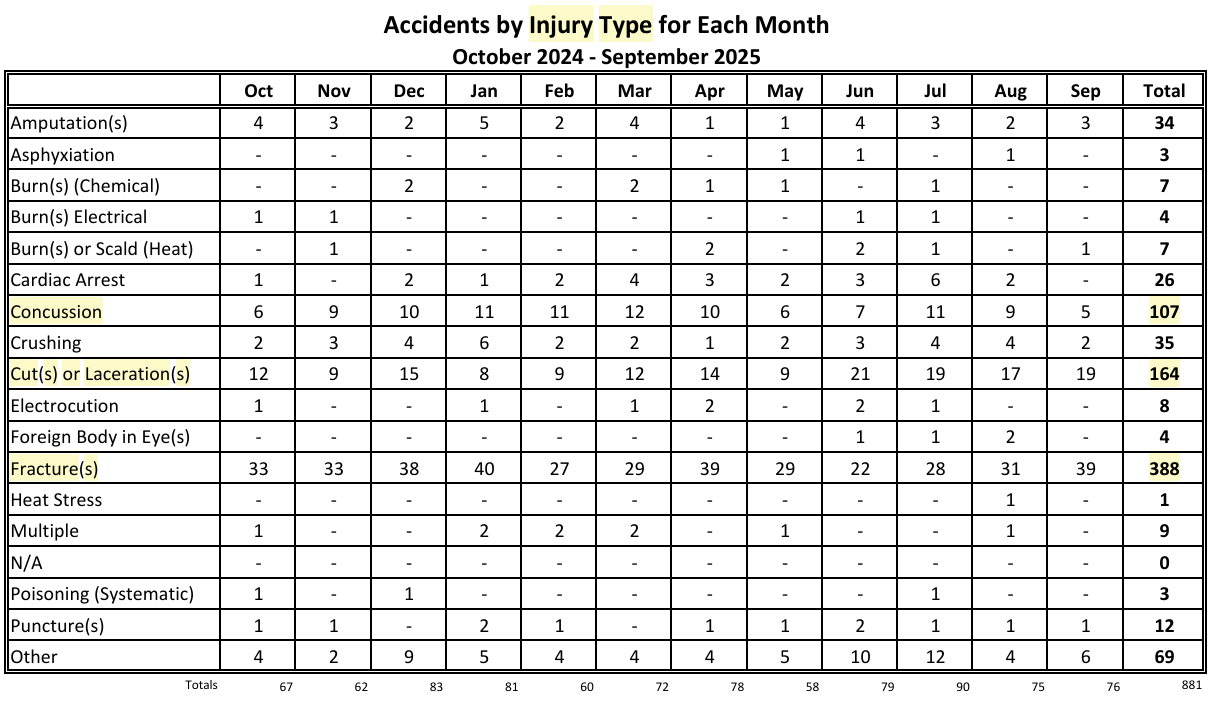
- Fractures: 388
- Cuts/Lacerations: 164
- Concussions: 107
- Struck-by incidents: 235
- Slip/Trip/Fall incidents: 216
These numbers reflect the physical nature of our work and the importance of training, PPE, and hazard awareness.
🛠️ Top Safety Violations in Construction
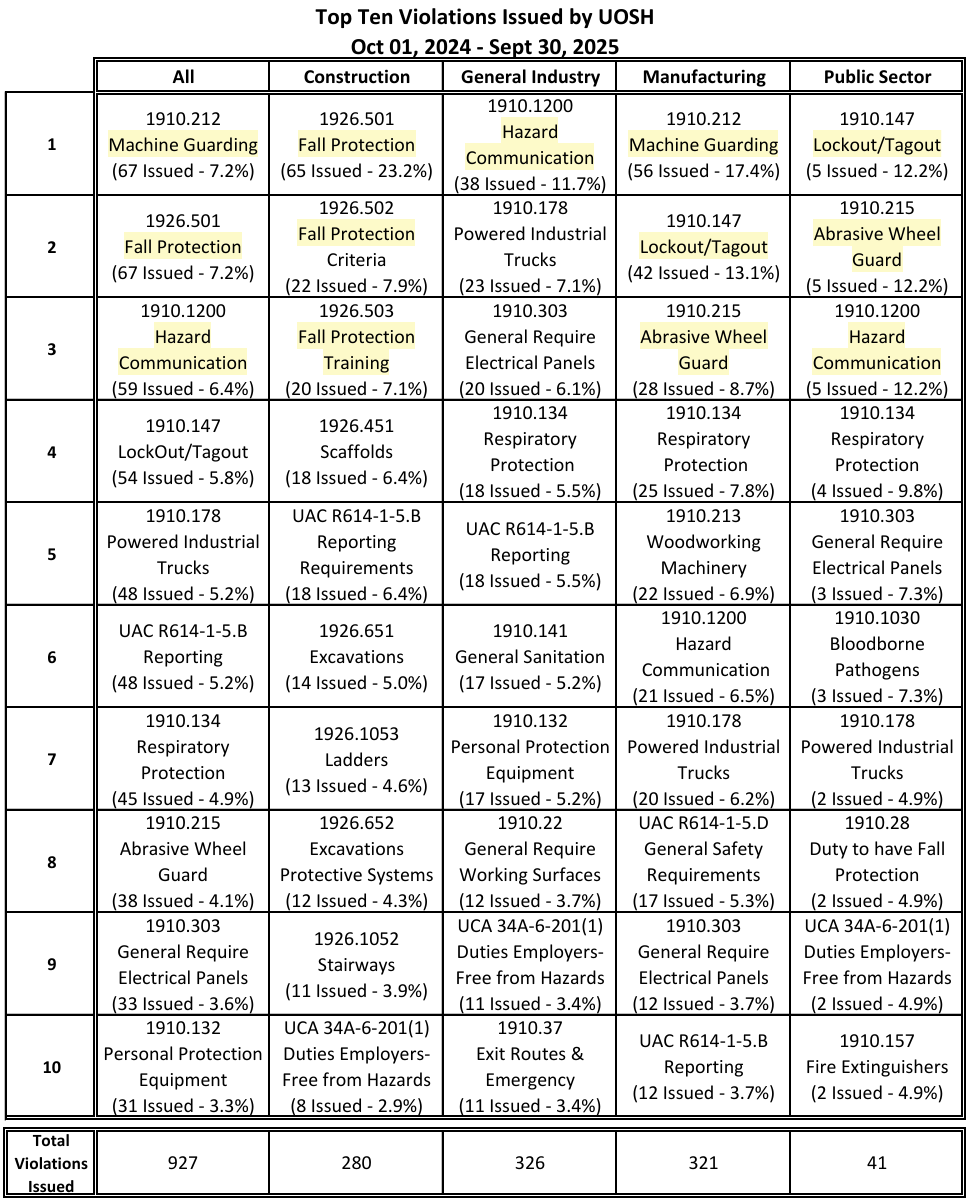
The most frequently cited violations included:
- Fall Protection (1926.501)
- Fall Protection Criteria (1926.502)
- Fall Protection Training (1926.503)
- Scaffolding (1926.451)
- Excavation Hazards (1926.651)
These citations highlight where enforcement is focused—and where contractors should double down on compliance.
📍 Why This Matters
These numbers aren’t just statistics—they represent real people, families, and businesses. By understanding where accidents are happening and why, URCA members can take meaningful steps to improve safety, reduce liability, and protect our workforce.
We encourage all members to:
✅ Review your safety programs and training protocols
✅ Attend URCA’s upcoming CE and safety workshops
✅ Share this data with your teams and subcontractors
✅ Reach out to URCA for support in navigating compliance or implementing best practices
Together, we can build a safer, stronger Utah construction industry!
Read More